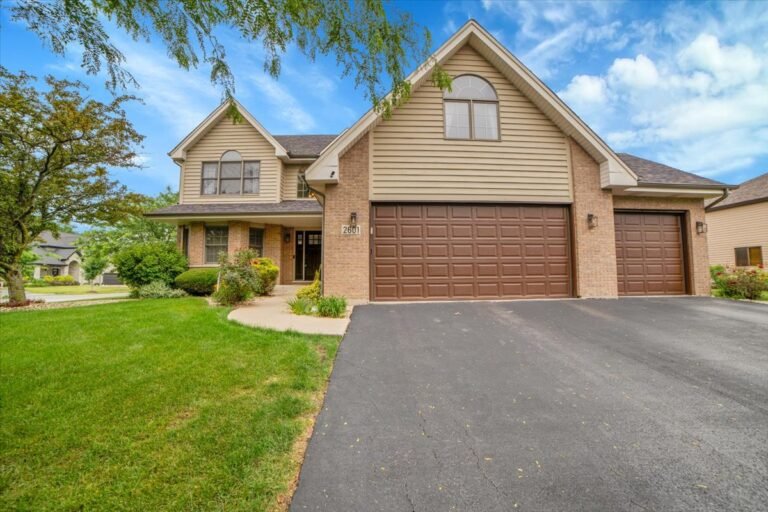
Residential Appraisal. usually shows up when something important is happening — buying a home, selling one, dealing with taxes, or handling legal or family matters. That’s when the question suddenly becomes very real:
what is this property actually worth in today’s market
Across Western and Southwestern Chicago suburbs, where property values can shift from one area to another quickly, this becomes even more important. That’s why experienced professionals like Schultz Appraisal Services LLC are often involved when accuracy really matters.
First things first — what is actually happening in a residential appraisal
A home does not have a fixed value forever. It changes with the market, location demand, condition, and buyer behavior.
So a Residential Appraisal is basically asking one clear question:
if this home was sold right now, what would a real buyer actually pay for it
To figure that out, the appraiser looks at:
- recent home sales nearby
- current condition of the property
- upgrades or repairs
- neighborhood trends
- how the local market is behaving
Then all of that is turned into one realistic value.
Not high. Not low. Just what the market supports.
When people usually need a residential appraisal (real-life situations)
Instead of thinking of it as a formal process, it helps to see when it actually shows up in real life.
- when selling a home feels confusing
This is one of the most common reasons.
Many sellers are unsure how to price their home. Too high, and it sits. Too low, and money is lost.
A Residential Appraisal helps bring clarity by showing:
- a realistic price range
- current buyer expectations
- true market value
It removes guesswork and replaces it with something solid.
- when buying a property and not wanting to overpay
For buyers, this is protection.
A Residential Appraisal helps confirm:
- the home is worth the price being asked
- the deal is financially fair
- lending requirements are met
Lenders also rely on it before approving loans because they want to avoid lending more than a home is worth.
- when refinancing and checking current value
When homeowners refinance, the bank needs updated value information.
A Residential Appraisal helps:
- confirm current market value
- support loan restructuring
- calculate equity accurately
If the value has increased, it can even help improve loan terms.
- when taxes feel too high
Sometimes property tax assessments don’t match real market value.
In those cases, a Residential Appraisal can:
- show actual home value
- support tax appeals
- provide official documentation
- challenge over-assessments
This is especially relevant in active suburban markets across Chicago’s western and southwestern areas.
- when divorce or separation happens
This is one of the most sensitive situations.
A Residential Appraisal is used to:
- determine fair property value
- support asset division
- reduce disputes
- create neutral ground for decisions
It removes emotion and replaces it with facts both sides can rely on.
Dealing with inheritance or estate matters
When property is passed down, value needs to be clearly defined.
A Residential Appraisal helps:
- establish estate value
- support probate requirements
- ensure fair distribution
- provide legal documentation
It keeps the process clear and transparent.
Why location matters so much in Western and Southwestern Chicago suburbs
Real estate value is never the same everywhere.
Even within nearby suburbs, value changes based on:
- school districts
- local demand
- commute access
- neighborhood development
- buyer preferences
That’s why a Residential Appraisal in this region needs strong local understanding.
Companies like Schultz Appraisal Services LLC bring that local insight, which helps make the valuation more accurate and reliable.
How the process actually feels from start to finish
Even though it sounds technical, it is very structured.
- First, the property is inspected to understand its current condition.
- Then recent comparable home sales are studied.
- After that, local market trends are reviewed.
- Adjustments are made based on size, upgrades, condition, and location.
- Finally, everything is compiled into a clear report showing real market value.
That report becomes the final reference point.
Conclusion:
A Residential Appraisal is a decision-making tool that brings clarity when value really matters.
Whether someone is buying, selling, refinancing, handling legal matters, or dealing with taxes, having a clear and accurate value makes everything easier.
In Western and Southwestern Chicago suburbs, where property values can shift quickly, working with experienced professionals like Schultz Appraisal Services LLC helps ensure decisions are based on real market data, not guesswork.
Frequently Asked Questions
What is a Residential Appraisal?
It is a professional way of finding the real market value of a home based on sales data, condition, and location.
When is a Residential Appraisal needed?
It is needed during buying, selling, refinancing, divorce, estate settlement, and tax appeals.
Does it set the selling price?
No, it estimates market value, but the final price depends on buyer demand.
Who performs it?
A licensed appraiser with experience in local market conditions.
How long does it take?
Usually a few days to a couple of weeks depending on the property.
Why is it important for buyers?
It helps prevent overpaying for a property.
Why is it important for sellers?
It helps set a realistic and competitive listing price.
Can it be used for tax appeals?
Yes, it is often used as strong supporting evidence.
What affects the value most?
Location, condition, size, upgrades, and recent comparable sales.
Why is local expertise important?
Because property values vary widely even between nearby suburbs.